

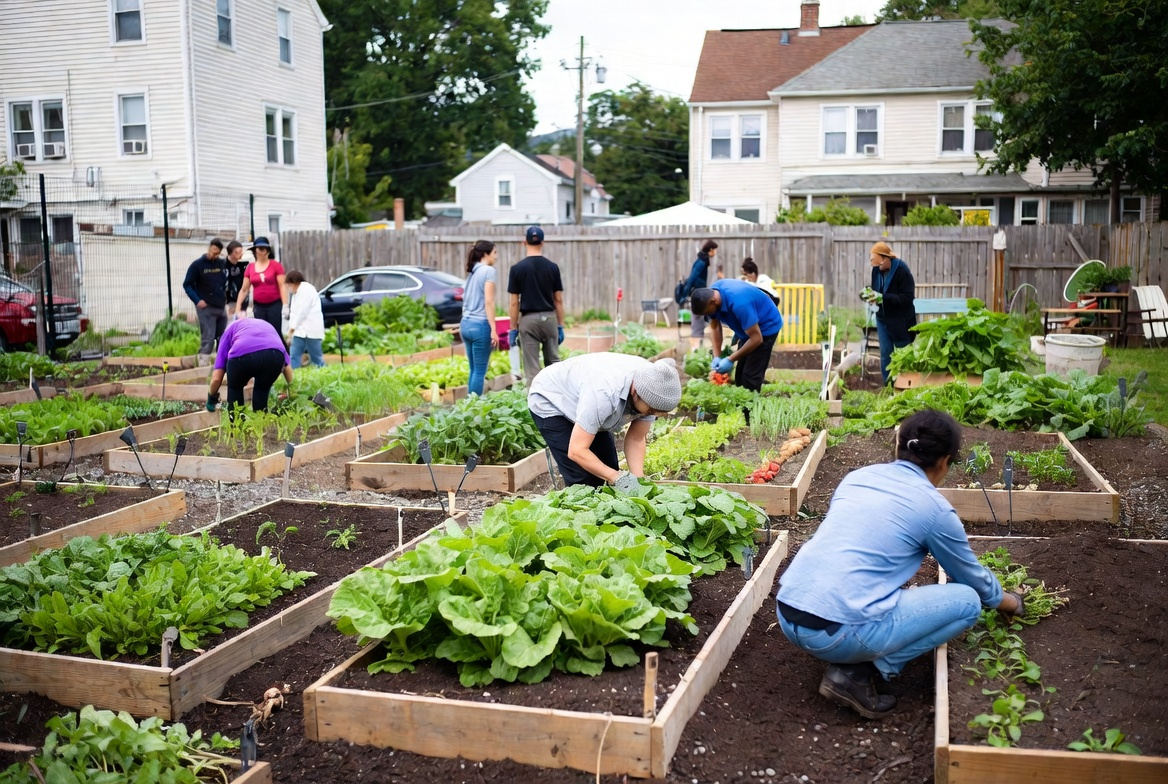
Community gardens do more than grow vegetables — they build food access in neighborhoods that need it most. Whether you want to grow your own food or benefit from a shared harvest, here is how to get involved.
What Are Community Gardens?
Community gardens are shared spaces where individuals, families, or groups grow fruits, vegetables, herbs, and flowers. They can be found in urban, suburban, and rural areas — on vacant lots, in parks, at schools, and in neighborhoods across the country. Some are organized into individual plots; others are collectively maintained.
Benefits of Community Gardens
- Access to fresh, nutritious produce at little or no cost
- Physical activity and time spent outdoors
- Connection with neighbors and reduced social isolation
- Educational opportunities for children and adults
- Improved mental health and stress reduction
- Increased property values in surrounding neighborhoods
How to Find a Community Garden
Step 1: Search the American Community Gardening Association directory at communitygarden.org.
Step 2: Check with your local parks and recreation department.
Step 3: Ask at your local Cooperative Extension office (run by universities in every state).
Step 4: Look for garden plots through community organizations, churches, and neighborhood associations.
Many community gardens offer free or reduced-cost plots for low-income participants. Some provide seeds, tools, and gardening education at no charge. Ask about fee waivers when you sign up.
Starting a Garden Plot
Most community gardens require you to sign up for a plot (typically 4×8 feet or 10×10 feet), agree to basic rules about maintenance, and commit to regularly tending your space. Many gardens host orientation sessions for new members and provide mentoring from experienced gardeners.
Urban Agriculture Programs
Beyond community gardens, urban agriculture programs include rooftop farms, vertical growing operations, aquaponics systems, and food forests. Many cities now have organizations that train residents in urban farming techniques and connect growers with markets and food distribution programs.
Did not finish? Pick up where you left off.
Your answers are not saved — check your eligibility now before you go.
Relief Resource Center may receive compensation when you use links or tools on this page. All programs listed are subject to eligibility requirements and availability. This page is for informational purposes only and does not constitute legal, financial, or medical advice.



Leave a comment